
The best projects of medical institutions 2022
The Healthcare Design Awards showcase the best achievements in healthcare design, planning and research focused on healthcare design.
Center for Health and Wellbeing
Architectural firm: Duda|Paine Architects
Owner: Winter Park Health Foundation and Winter Park Memorial Hospital
Location: Winter Park, Florida, USA
Category: Built: Over $25 Million (Cost of Construction)
Area: 7,246 sq.m
Year of construction: 2019
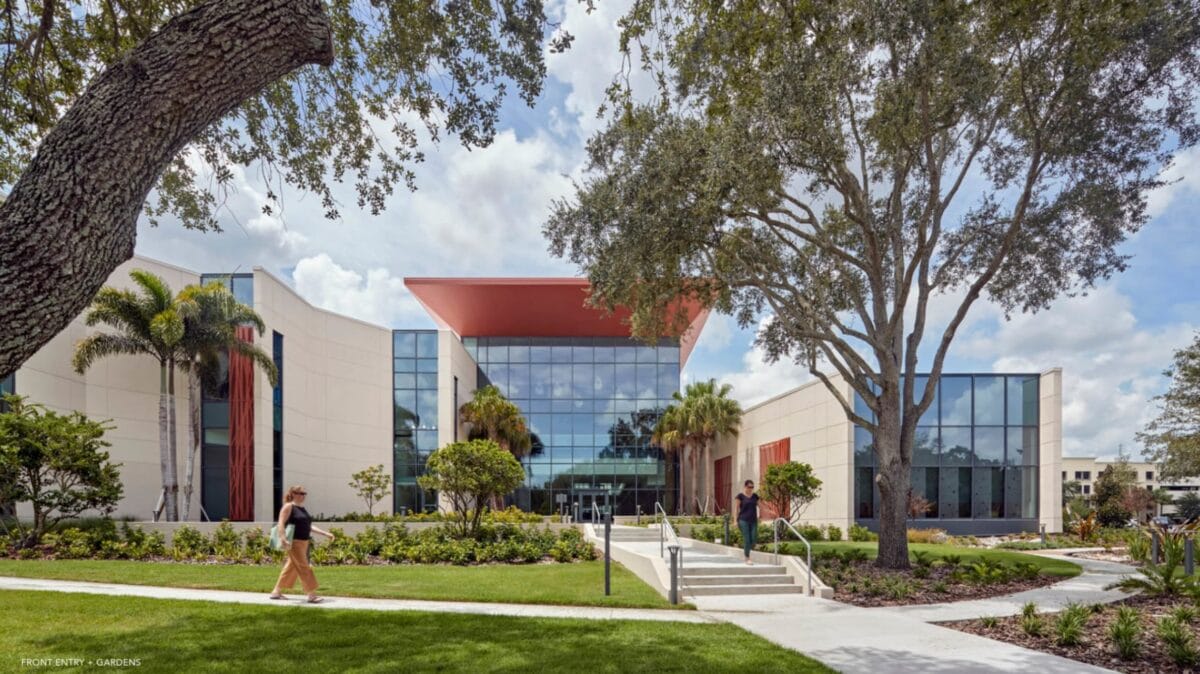
Drawing on the healing power of nature, the Center for Health and Wellness in Winter Park, Florida is a showcase for community health. The center has a transparent and attractive architecture that blurs the imaginary boundaries between everyday life, fitness, traditional and alternative medicine. The project also implements the Winter Park Health Foundation’s vision of wellness in one integrated facility that makes a positive difference in the lives of its users.
Since its opening in 2019, the center has been visited by thousands of patients. The team of architects designed a wonderful garden with colorful and fragrant plants that connects them with the local ecology and promotes decompression and stress relief. A series of additional gardens surround the site, all connected by a walkway and filled with seating areas for socializing or quiet meditation.
The proportions, scale and natural materials such as wood and stone create a welcoming atmosphere while reflecting the nature of the surroundings. The walls of different heights form the basic architectural geometry of the building, which is related to the movements of a person when he stands, sits and stretches his arms. As the walls rise to one or two floors, they begin to enclose the center’s clinical spaces.
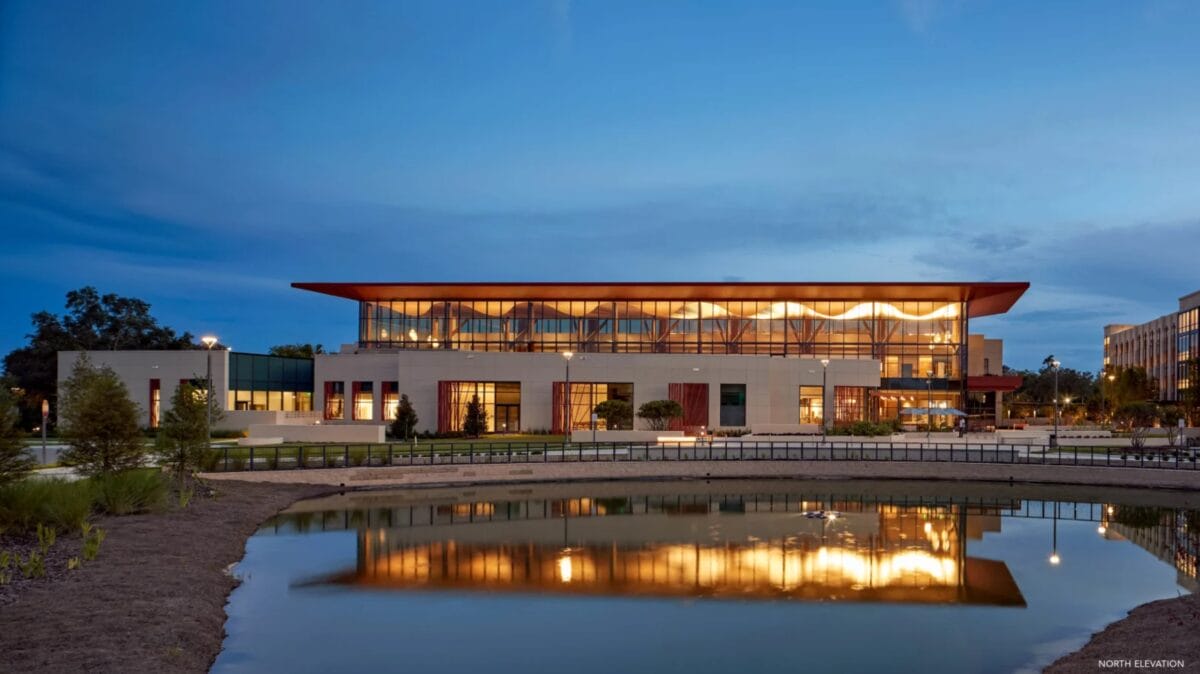
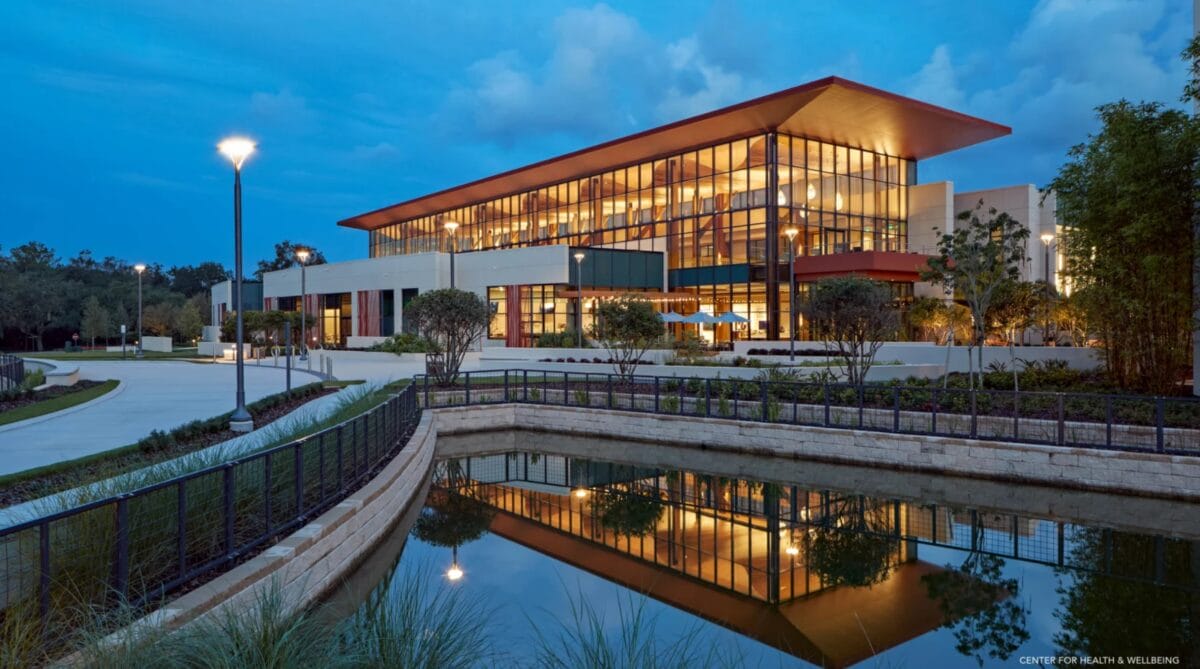
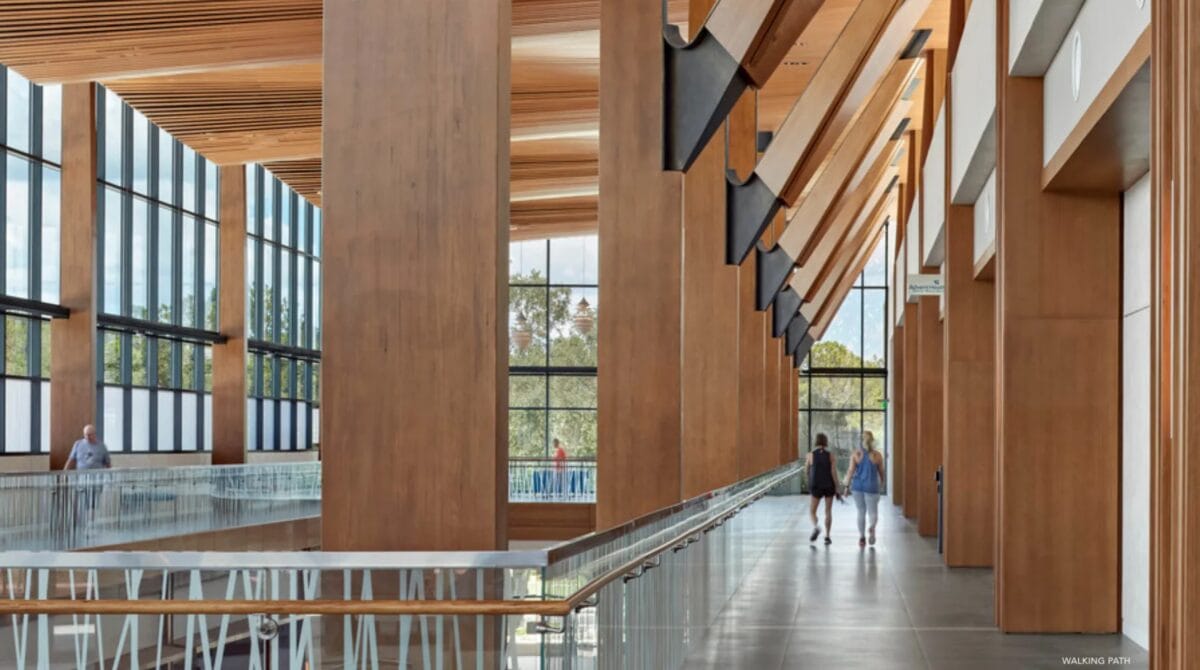
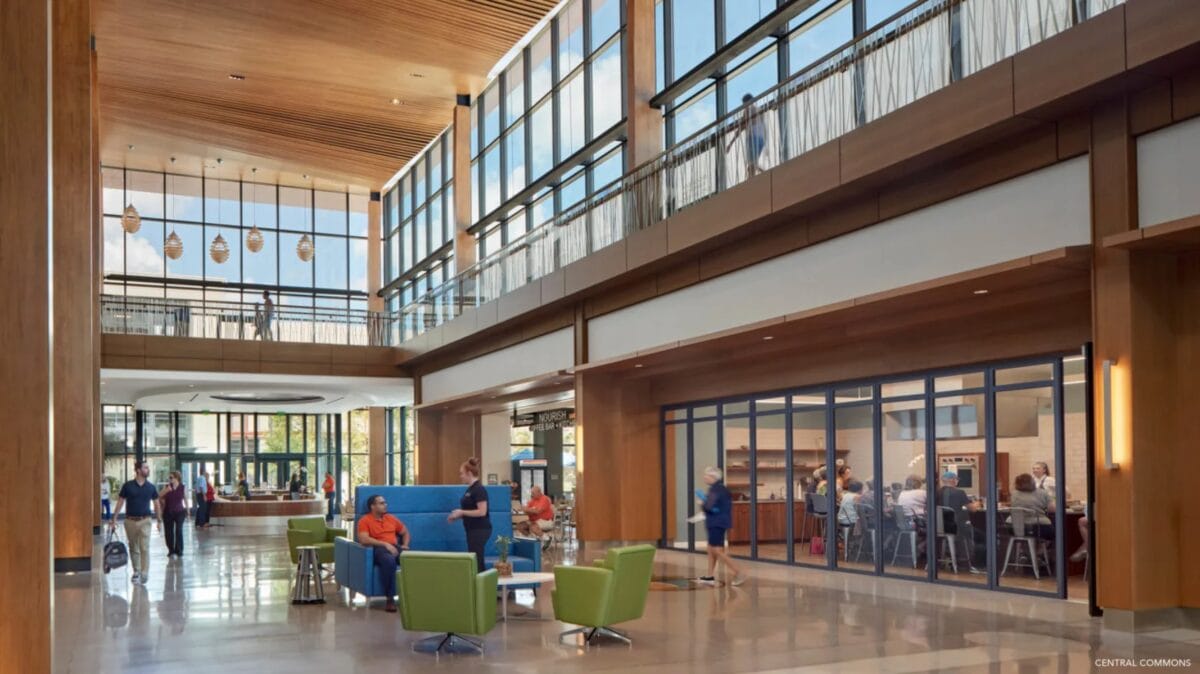
Inside the building, flexible interior spaces can quickly adapt to changing healthcare needs and facilitate interdisciplinary exchange of expertise. The heart of the center is a commons area filled with natural light that provides a multipurpose space for community-oriented events and is closely linked to three programmatic specialties that provide facilities for fitness, health care and education. An undulating wooden ceiling spans the entire common space. The floor contains seven terrazzo medallions 1.8 meters in diameter, which were made by local artists to represent the seven dimensions of well-being.
“This project has a clear idea that the jury liked, as well as the seven dimensions of well-being that were implemented in the design. The project inspires and allows you to see a program aimed at keeping people healthy, not just treating them when they are sick. This project had to solve many complex issues and programs, and they were well solved in the central atrium; it’s a great space to organize.” – the jury’s comment
The hospital, through thoughtful design, is able to serve a population that is made up of many age groups and socioeconomic levels, encouraging everyone to participate in the best health care practices. The hospital’s program includes a children’s center and a training program for elderly care. Accessibility for patients and visitors with all physical disabilities included detailed planning of floor levels and finishes. The 2.5 meter wide paths that surround the perimeter of the site allow pedestrians, cyclists and people in wheelchairs to easily bypass each other.
A series of architect meetings with the public and open days gathered enough feedback and contributed to public involvement in the planning of the hospital. The team was able to answer questions and take into account all the wishes of the community, thus creating the best possible environment for the community. The open architecture of the center, gardens and paths leading to other areas attract residents outside of Winter Park.
Dana-Farber Chestnut Hill Cancer Institute
Architectural firm: Payette
Owner: Dana-Farber Cancer Institute
Location: Chestnut Hill, Massachusetts, USA
Category: Reconstruction
Area: 13,006 sq.m
Year of construction: 2021
The new facility in Chestnut Hill is the Dana-Farber Cancer Institute’s most significant development in decades. Thanks to the adaptive reuse of two floors of a former commercial building, the facility provides a full range of medical services and group care in an outpatient setting. This project is a significant achievement in the reuse of a unique building that meets all the requirements of the treatment program.
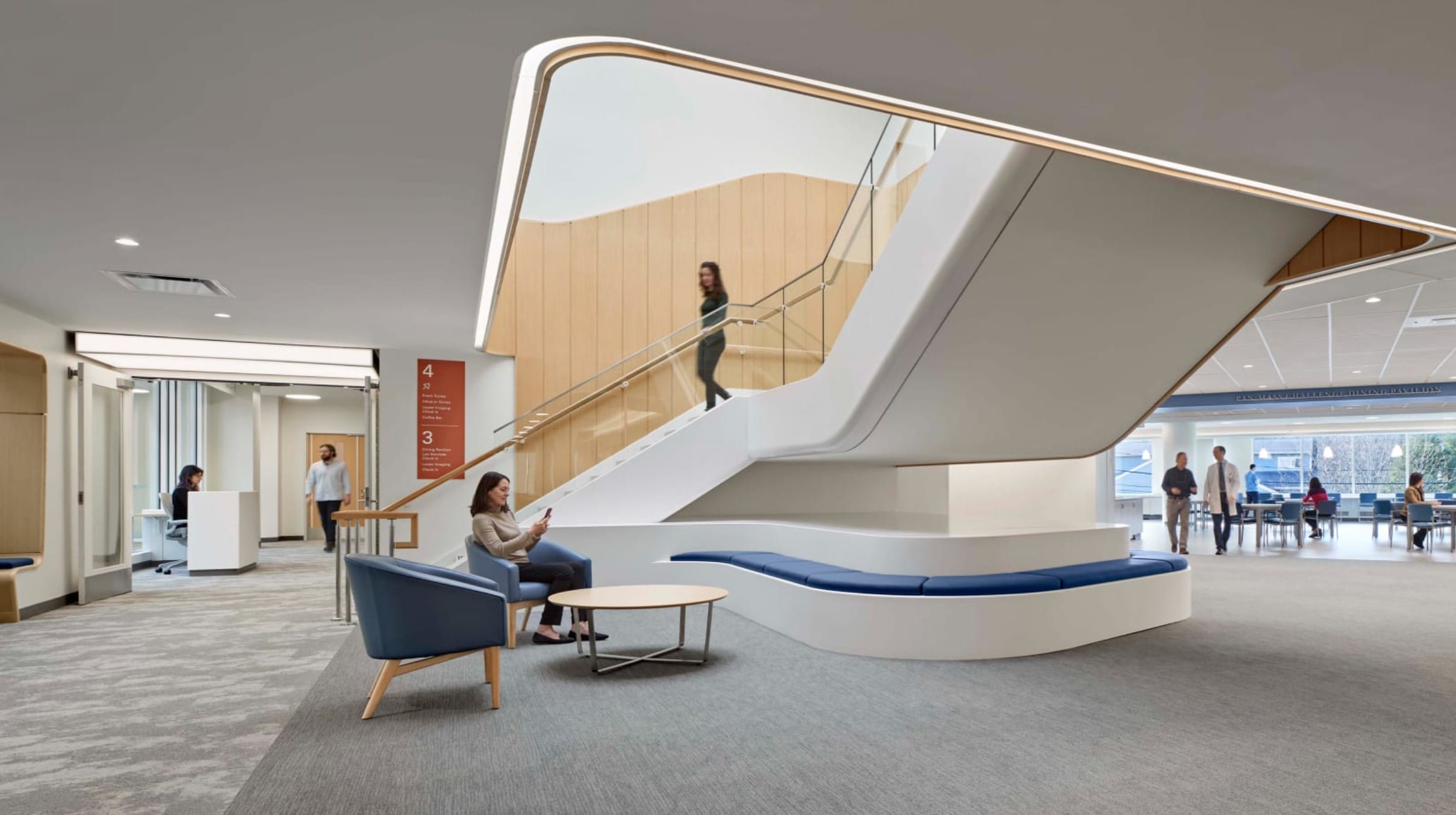
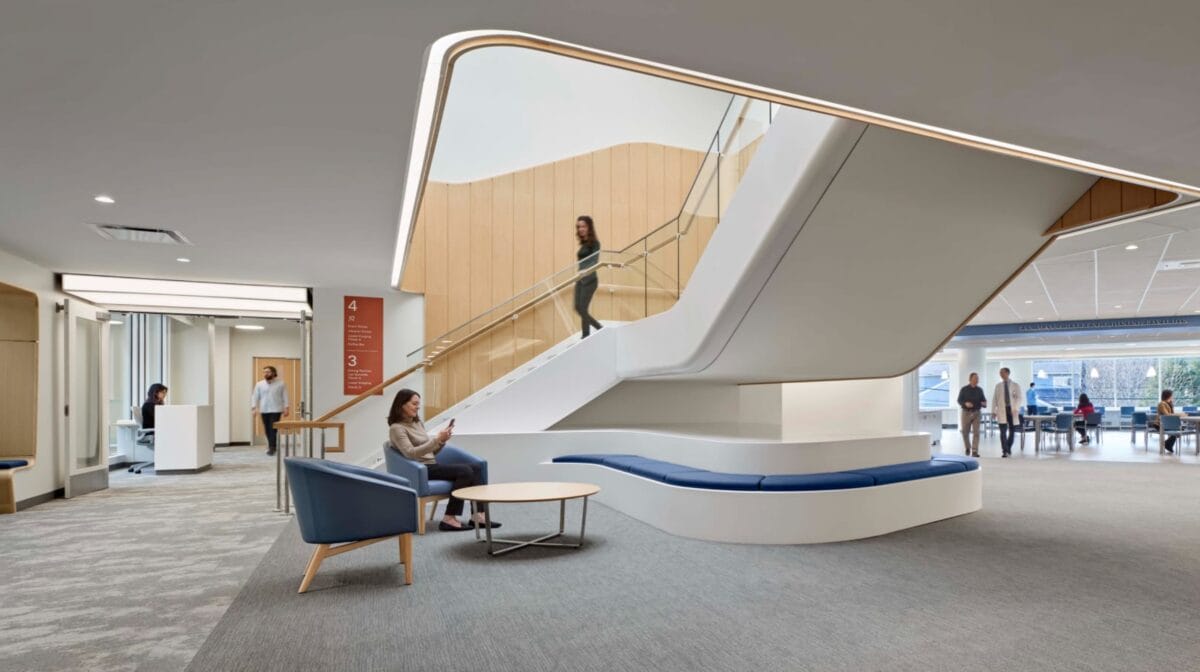
The project program includes, but is not limited to, examination rooms and infusion therapy rooms with amenities. The hospital also has MRI and CT rooms, about 60 examination and consultation rooms, 60 infusion therapy rooms, a pharmacy, a laboratory, a cafeteria and support services. Both floors are connected by a central staircase, which minimizes the need to use the elevator.
“The space is well planned and organized and the circulation of people is perfectly distributed between the zones. The jury liked how the stairs were integrated into the design.” – the jury’s comment
The reconstruction of the existing commercial building presented numerous physical challenges to the team of architects. However, despite the unusual and irregular grid of columns in the middle, the hospital is clearly and efficiently designed. Daylight now enters the general area where the main movement of people takes place. A sun-filled atrium that once divided the space joins the radial forms of the building to form a cluster of areas for private conversations. Sunlight also enters the waiting and circulation areas.
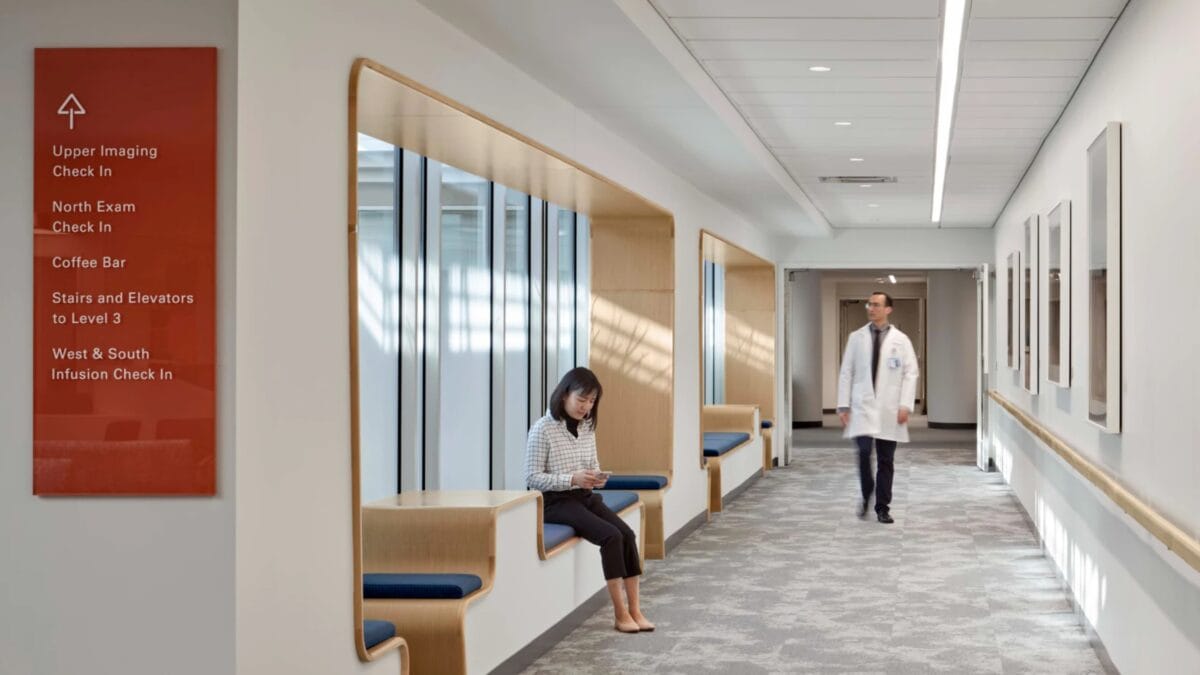
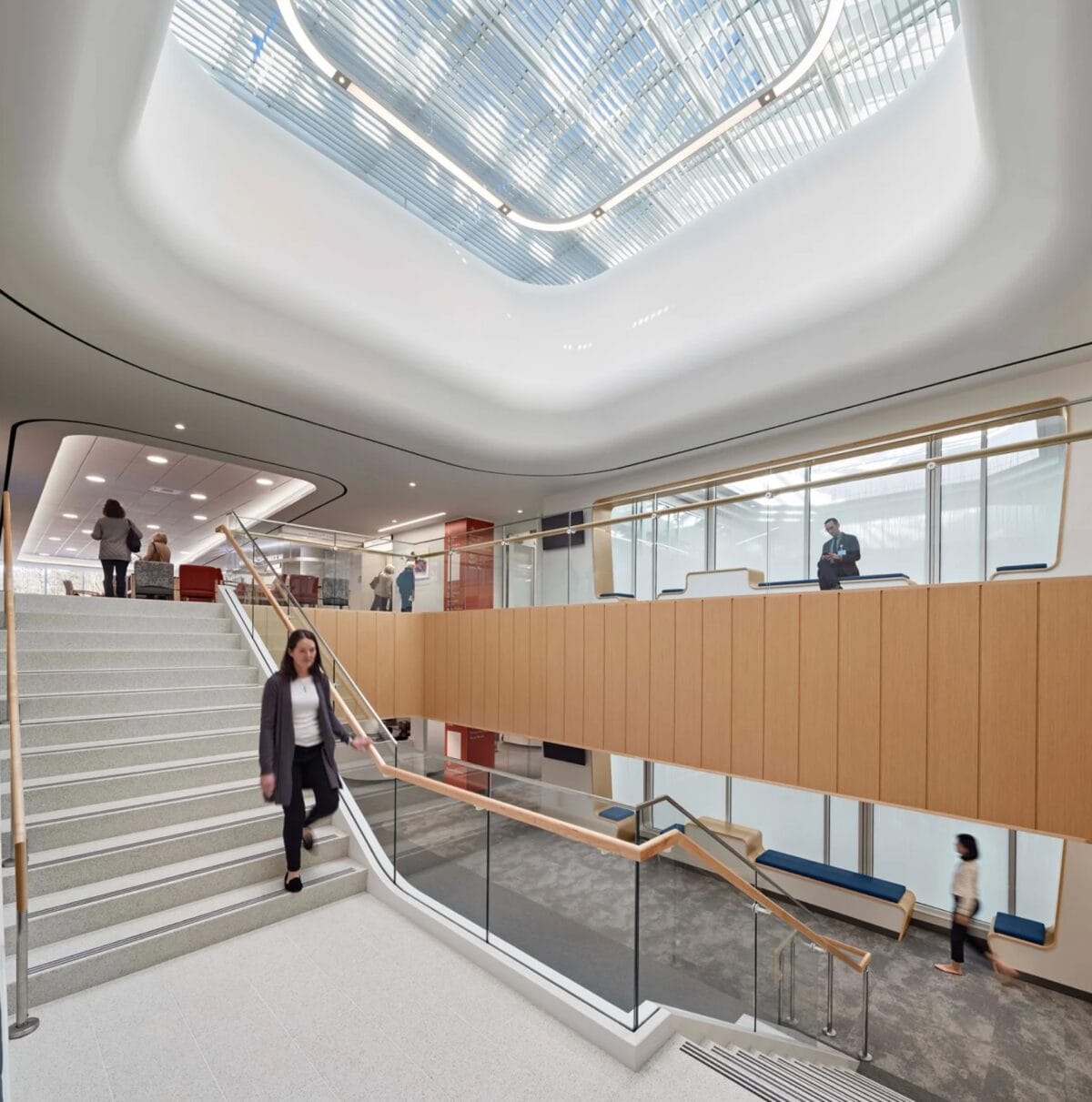
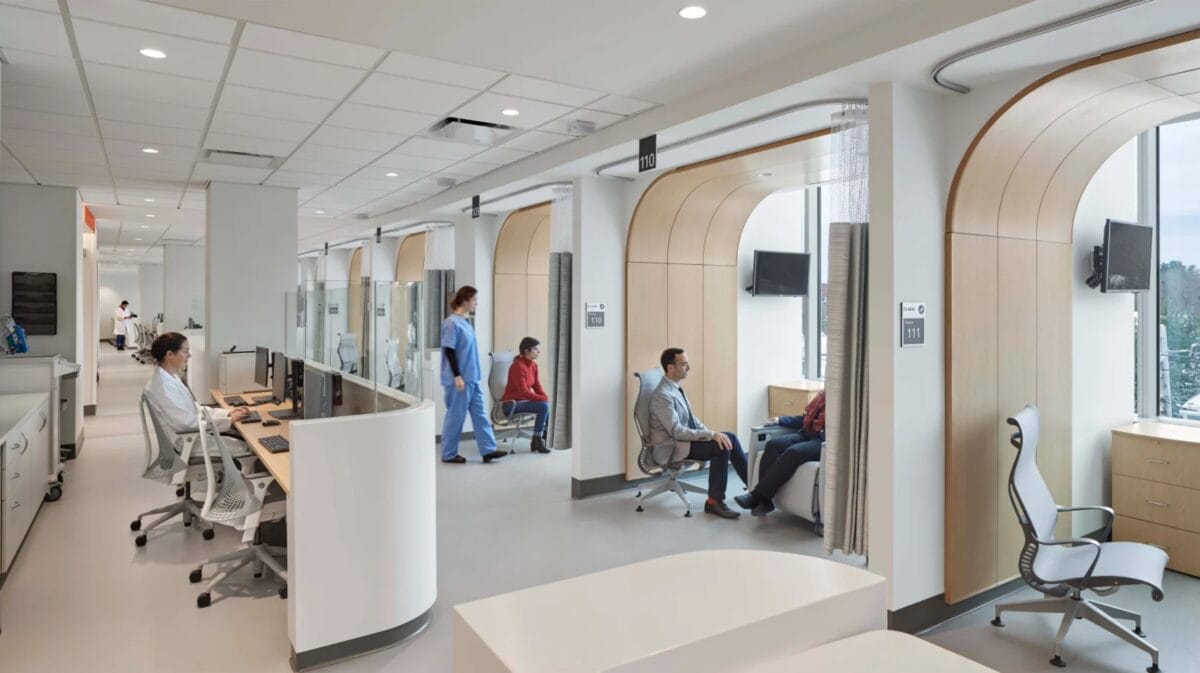
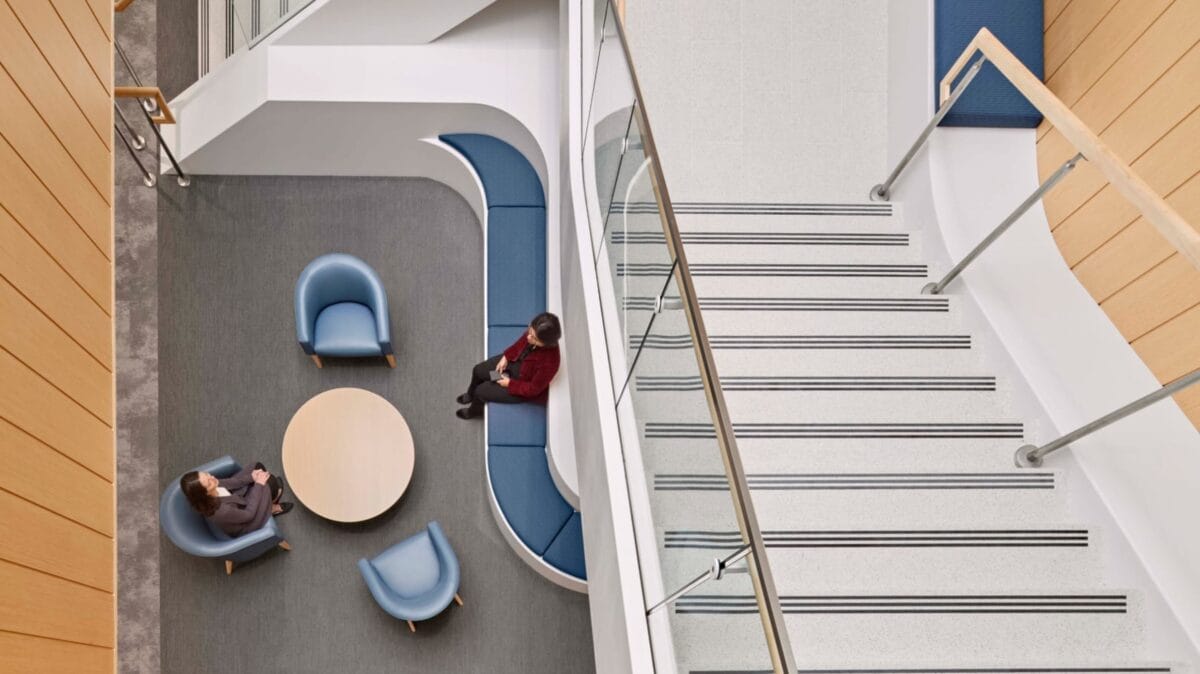
“This is a powerful renovation project that transformed a complex retail space into an accessible and light-filled hospital. The jury liked how programming was pushed to the background to take advantage of the views and bring light into the main spaces.” – the jury’s comment
The overall design was based on the themes of privacy, lighting and connectivity, and every subsequent decision was made in terms of its ability to reinforce these concepts. Recognizing that a cancer diagnosis and subsequent treatment is one of the most stressful and challenging times for patients and their caregivers, the design team ensured that every element of the hospital remained patient-centered. To break away from the sterile clinical experience, the designers installed soft sculptural soffits and reception desks. Together with a number of tactile natural elements, these features help create a sense of security for the patient.
Oncology care can pose a risk to personnel, so this project exceeds all established environmental protection standards, including additional levels of radiation protection and improved ventilation systems. Since opening in January 2021, patient surveys have revealed high levels of satisfaction, often citing access to daylight and views. In addition, more staff than expected have requested to be assigned to this facility on a permanent basis.
Department of Kyabirva surgical center
Architectural firm: GKG
Owner: Global Surgical Initiatives
Location: Jinja, Uganda
Category: Unbuilt
Area: 1100 sq.m.
Year of construction: 2023
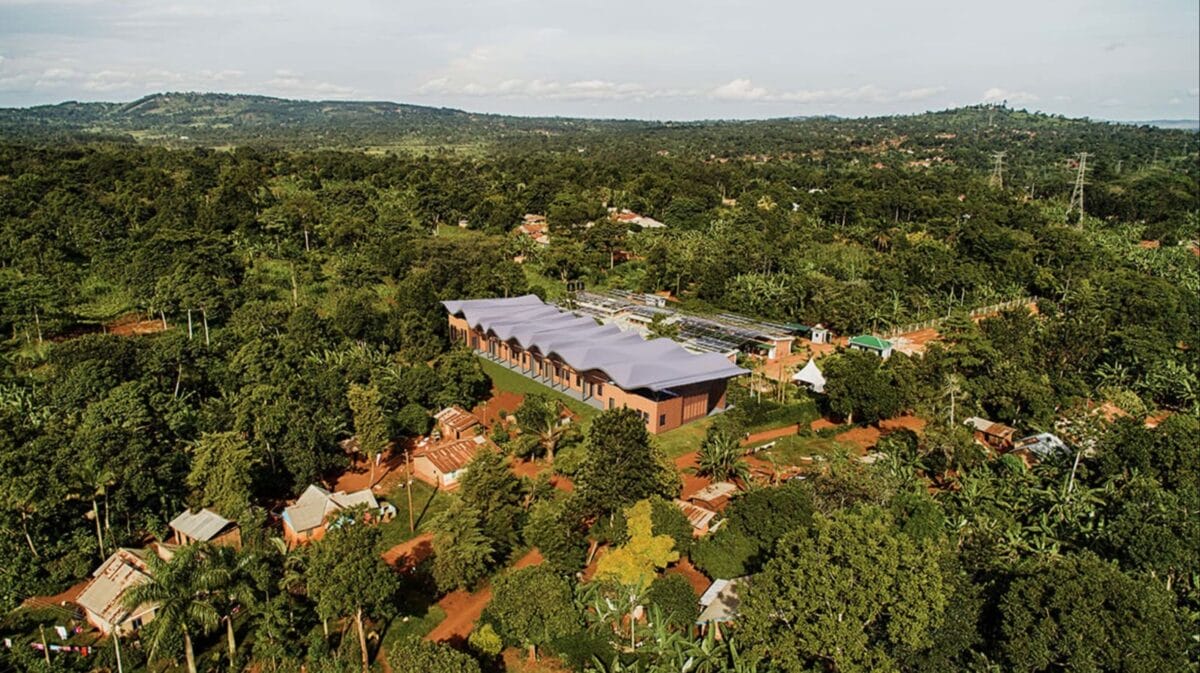
Although surgical services remain scarce for much of the world, this addition to the existing Kyabirwa Surgical Center dispels the myth that such services are technically impossible to provide in rural areas. When this project is complete, it will address the special needs of patients in rural areas who come to the center and need to stay overnight after their procedures. Located close to the famous rapids of the White Nile River and 8 kilometers north of Jinja, a nearby town, the project extends the center’s accessible and affordable services to more than 570,000 Ugandans.
Since its construction in 2019, the 743-square-meter surgical center has performed nearly 2,000 procedures, most of which did not require an overnight stay. Funded by a significant donation from New York’s Mount Sinai Hospital, the award-winning facility is a self-sustaining facility that generates all of its energy from solar panels and collects and stores water for later use. Demand for treatment and the number of patients from across the region coming to the center continues to grow and this new unit will accommodate patients who require a longer recovery period. In addition, it will dramatically reduce the travel time, which for many can be up to five hours.
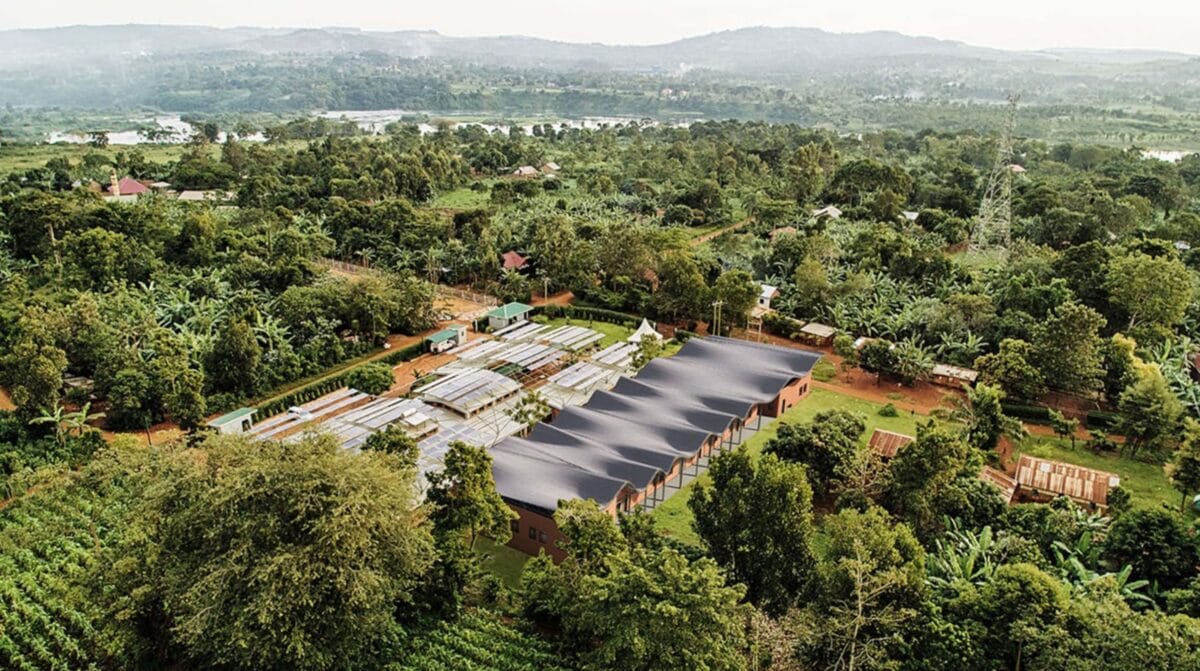
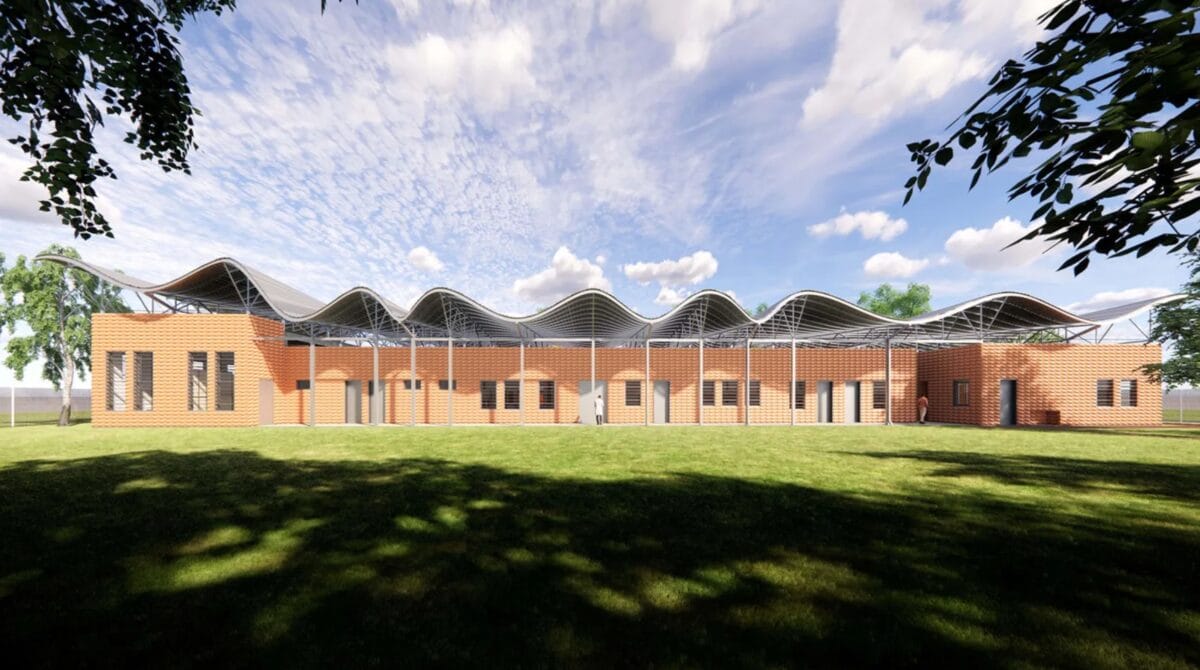
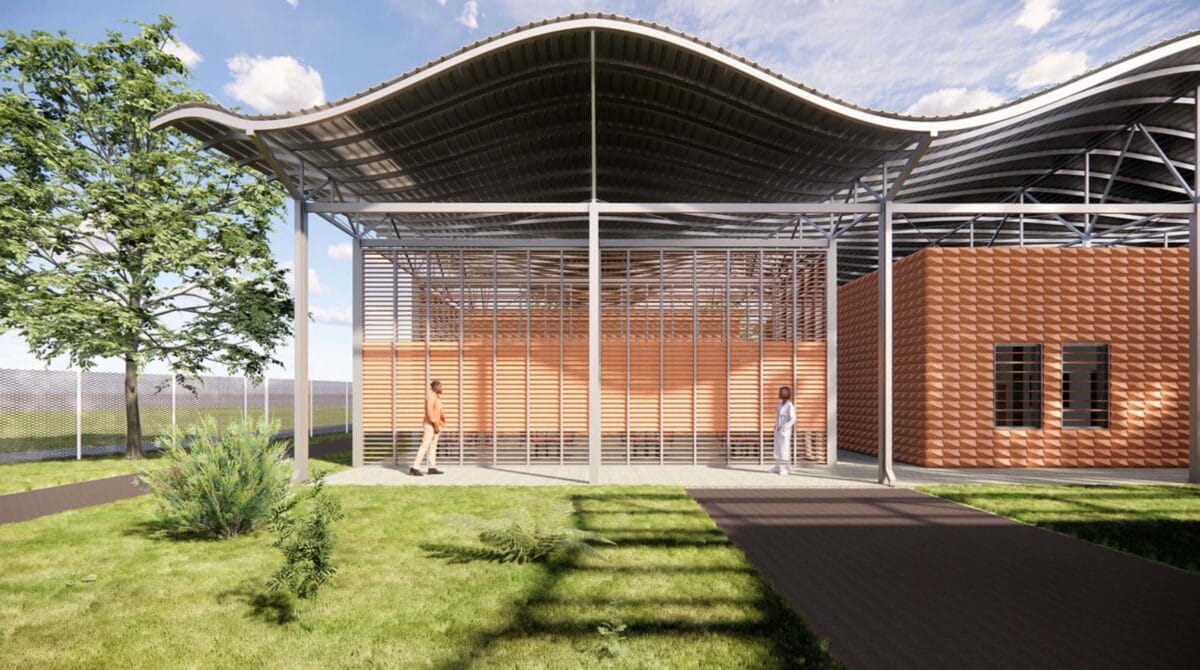
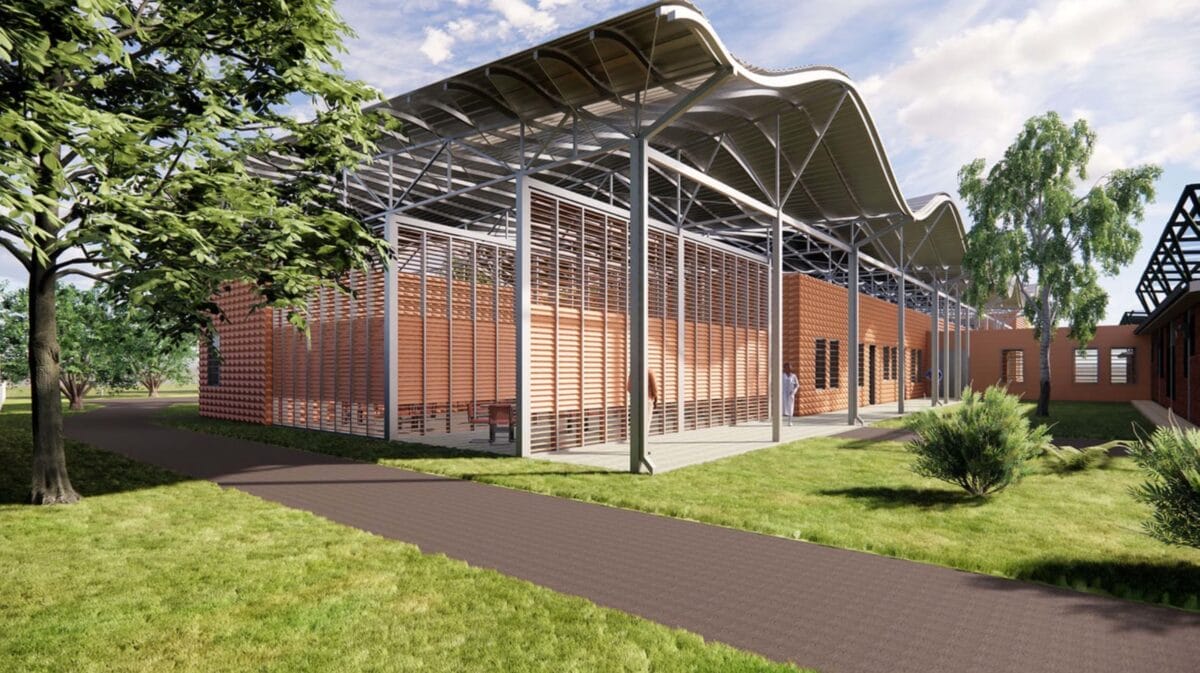
A new state-of-the-art laboratory at this center will allow obtaining biological materials for possible genetic and genomic analysis. The results obtained from these analyzes can have a beneficial effect on the treatment of various diseases. A state-of-the-art surgical simulation center is also planned for the facility, which will have an important impact on the training of surgeons in East Africa.
“The scope of this project and the scope of work are commendable.” – the jury’s comment
Any construction in such remote locations as Kyabirwa requires careful planning and consideration of construction techniques combined with a deep understanding of material availability. To ensure that the project met the specific conditions of the local climate, the design team balanced conventional construction methods with materials that were available in the region. Similar to the existing surgery center, the new unit incorporates natural and durable materials such as clay, stone and terrazzo, rather than materials that would need to be shipped from far away. Just like the main building, the branch is being built by local workers who know how to use such materials.
In this remote region, local utility companies sometimes experience power and water outages. Therefore, the new branch, like the existing center, will be completely autonomous. It will receive electricity from the center’s solar panels, which generate 54,000 kWh of electricity and can increase its production by 50%. The addition of an on-site wastewater treatment and disposal system means that both the center and the new branch can be replicated anywhere in the world.
“This project perfectly fit into the existing plot. The jury liked how the external geometry of the masonry correlates with the shape of the roof.” – the jury’s comment
In addition to a 24-hour inpatient facility, the new facility includes an advanced laboratory, staff canteen, training area and staff accommodation. The staff consists of 33 Ugandan health care providers and administrators, including one chief surgeon, two anesthesiologists, two medical assistants and nine direct care nurses. All patient records are stored in a cloud-based system developed by a Ugandan software developer. The facility continues to maintain a close relationship with Mount Sinai Hospital, whose physicians offer periodic consultations during complex procedures.
Montage Ohana Health Center
Architectural firm: NBBJ
Owner: Montage Health
Location: Monterey, California, USA
Category: Unbuilt
Area: 5165 sq.m.
Year of construction: 2023
Montage Ohana Health Center aims to challenge the notion that mental health should be relegated to institutional settings that isolate rather than treat. The center’s unique and visionary program aims to enhance positive treatment outcomes for young people through connection with nature. When the health center opens in 2023, the facility will offer a full range of affordable behavioral health resources to the community, regardless of ability to pay for treatment.
As the number of people reporting health problems skyrockets, and the mental health crisis in the US is exacerbated by a shortage of psychiatric beds and high levels of overcrowding in psychiatric facilities. The Montage Ohana Center is extremely important for California, where only 1,050 child psychiatrists serve more than 9 million children and adolescents, and most counties in the state have no adolescent psychiatric beds.
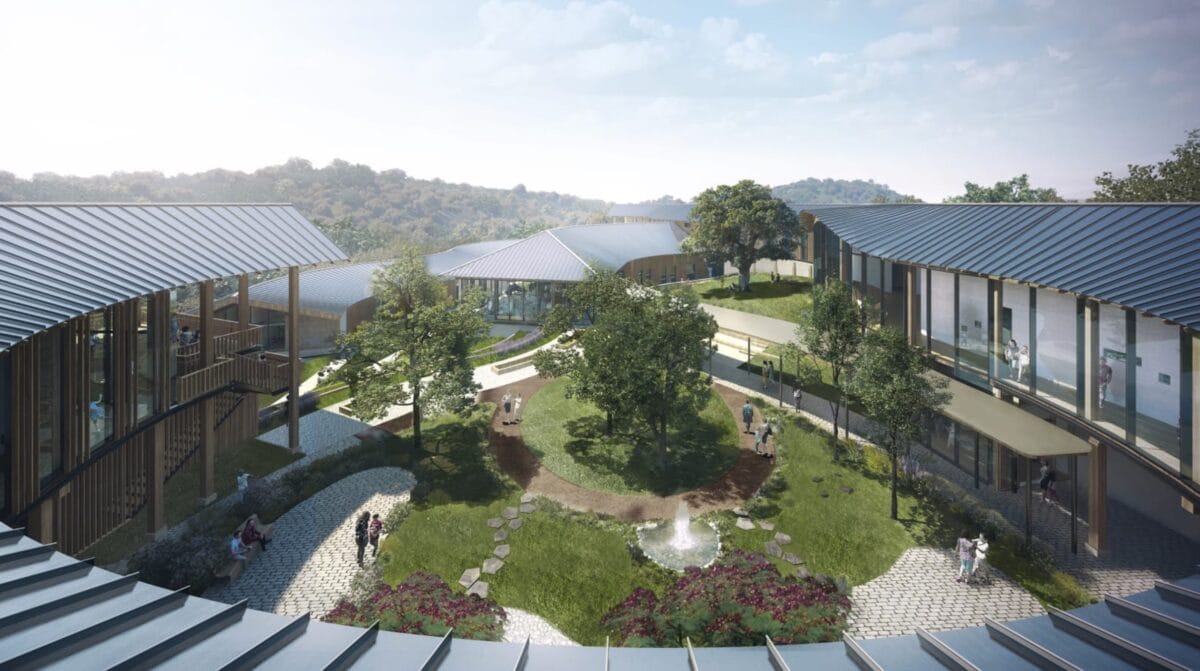
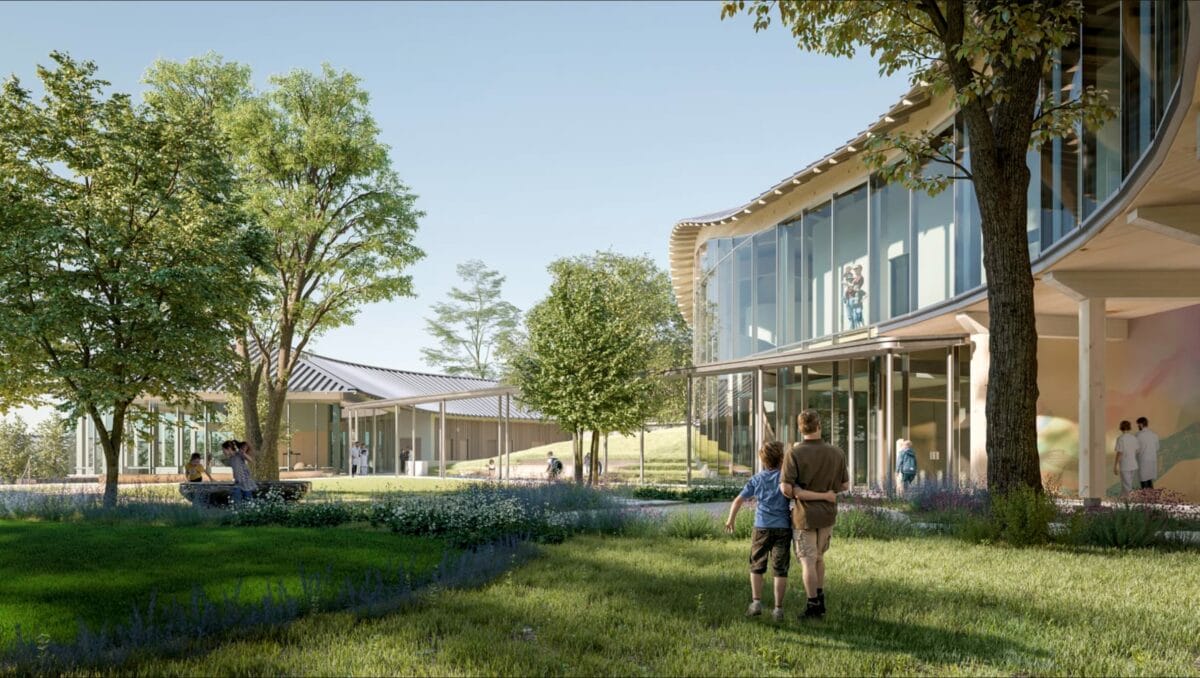
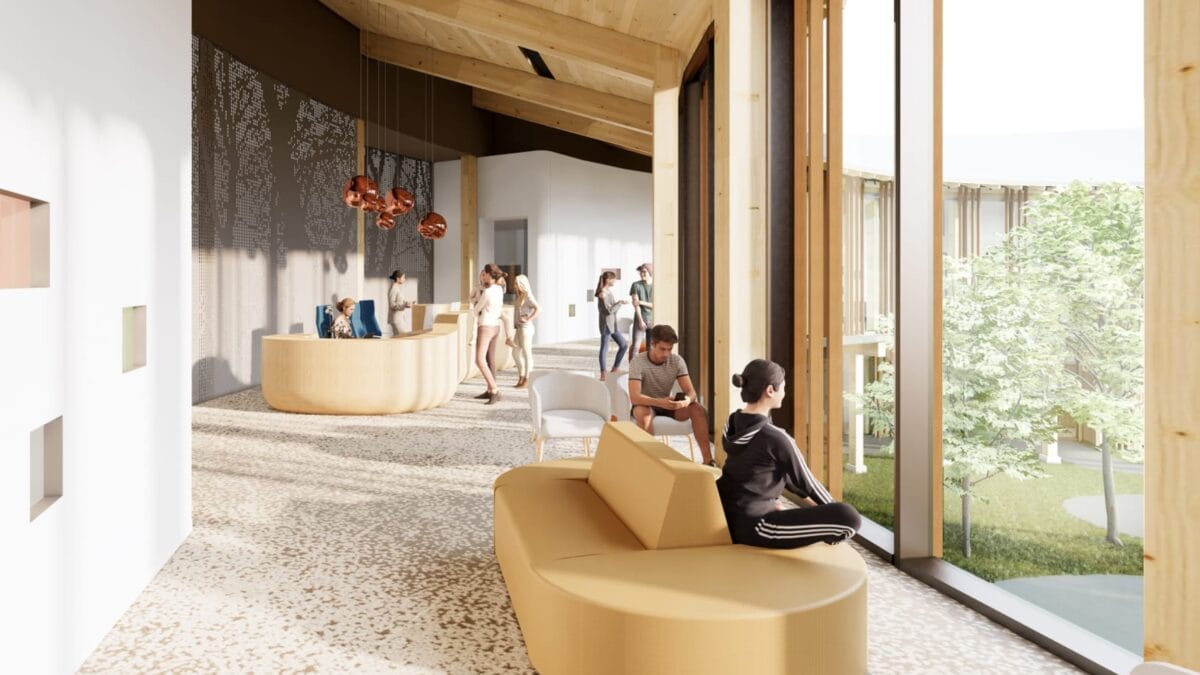
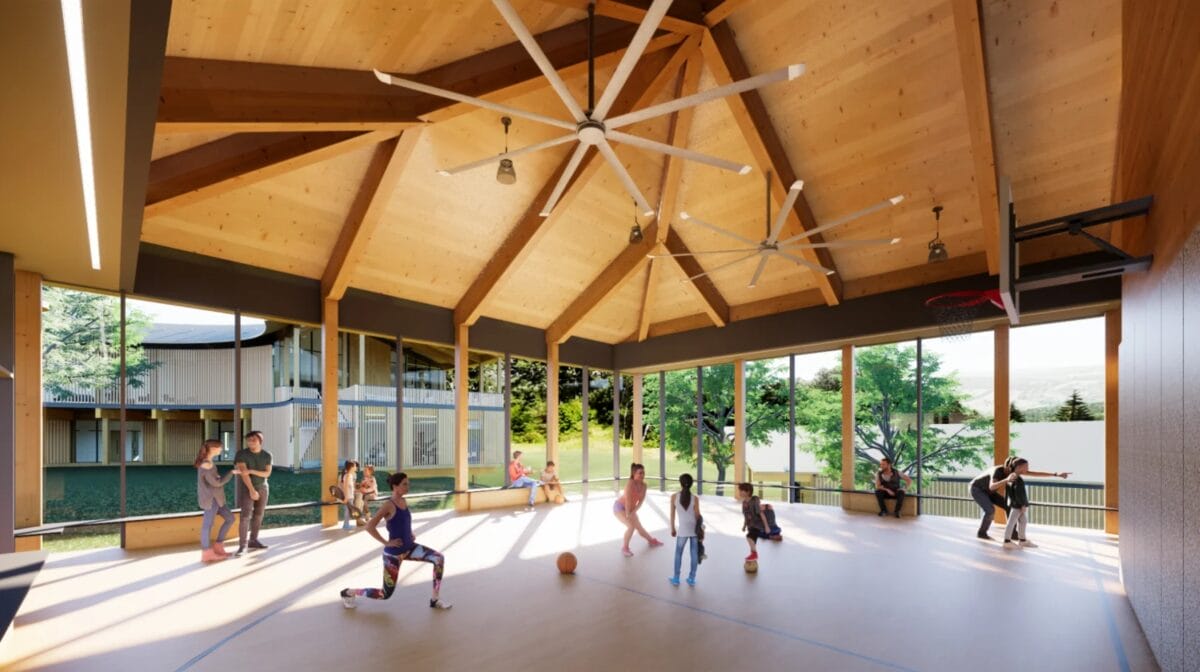
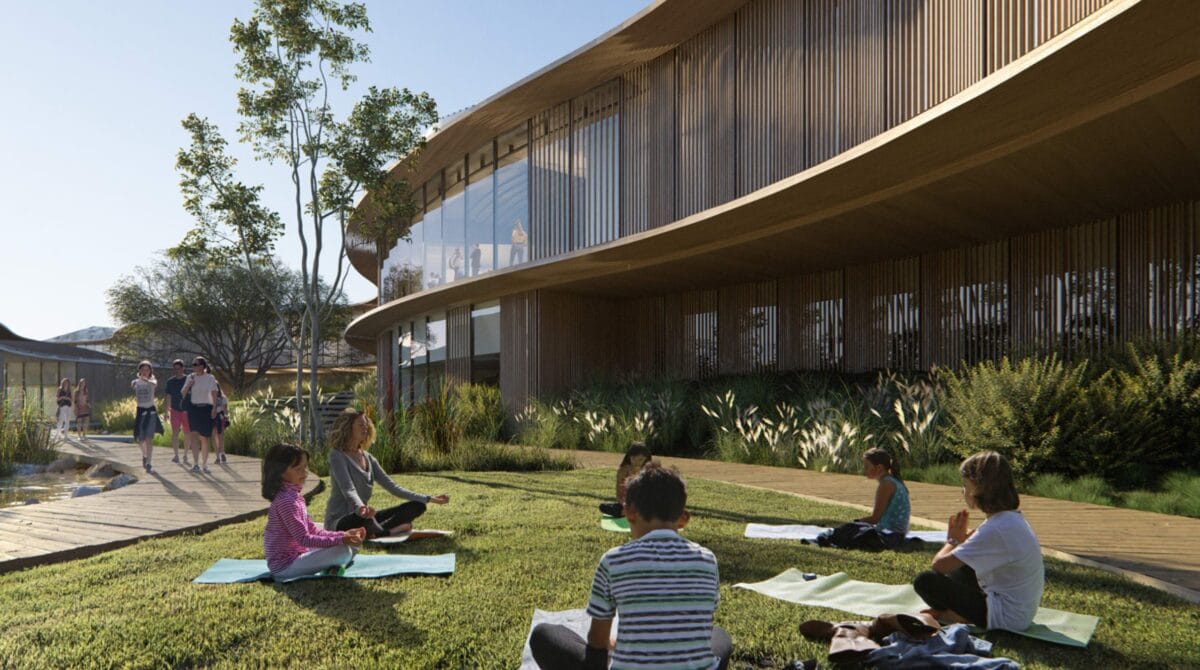
With the opportunity to be a potential prototype for similar institutions throughout the country, this center opens a new model of treatment. This model includes brain science research curated by molecular biologist Dr. John Medina. The design team applied appropriate techniques to create an environment that promotes health and well-being, emphasizing outdoor elements such as courtyards, gardens and views of nature. Blended with nature, the design of the center creates a series of open spaces that provide a calm and restorative environment. The water will cascade through a stretch of coastal canyon surrounded by gardens that grow immune-stimulating plants such as lavender and rosemary.
“The jury liked the institution’s policy of open doors for everyone who needs help. We were also impressed by the exceptional location of this project and how the team took advantage of the existing landscape, paying particular attention to the views of the patients. The skillful use of laminated wood is commendable as it is a less common material in the US healthcare sector.” – the jury’s comment
The architecture of the health center is a series of smoothly curved single-story buildings that combine an outpatient clinic, an intensive care unit, a 16-bed inpatient unit, and other integral spaces. The shape of the center creates a welcoming environment inside and out, creating a feeling of comfort. By providing a sense of unity, the center destigmatizes mental health and uplifts the spirits of adolescents and children at a critical time in their lives.
Considering the natural features, the wellness center blends perfectly with the sloping contours of the site and leaves many of the existing coastal oaks intact. The massive wooden construction avoids the embodied waste typical of concrete and steel structures. The facade of the center was designed using prefabricated modular structures to minimize the impact on the site. Glass along the facade maximizes daylight, while strategically placed timber fins optimize the building’s thermal performance and add a level of privacy where needed.
Rural orthodontic clinic
Architectural firm: Johnsen Schmaling Architects
Owner: Dr. Alison Mantel, DDS
Location: Cedarburg, Wisconsin, USA
Category: Built: under $25 million (build cost)
Area: 362 sq.m.
Year of construction: 2020
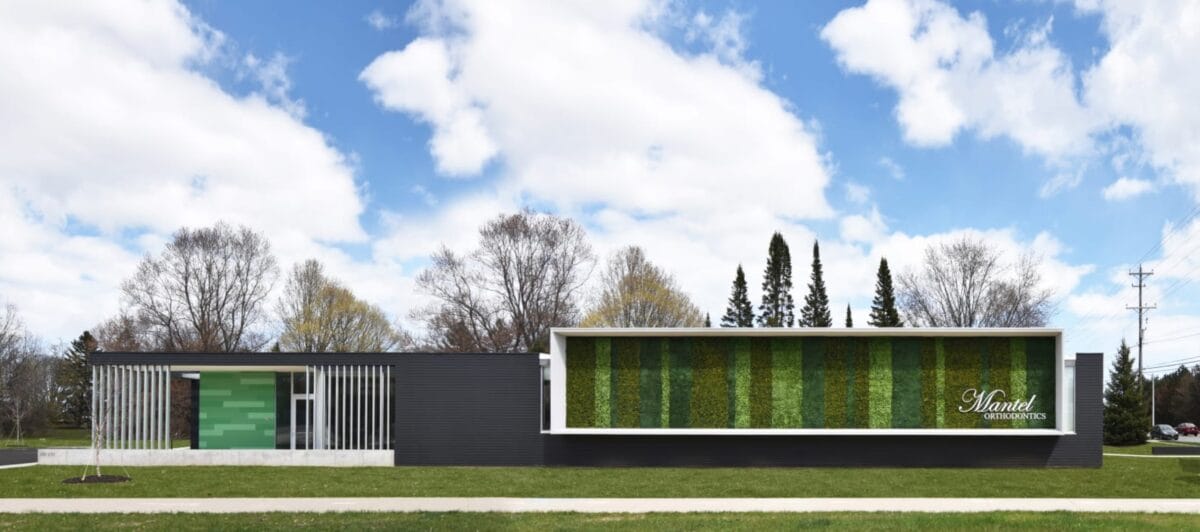
On the outskirts of Cedarberg, Wisconsin, where healthcare options are somewhat limited, this small orthodontic clinic flips the typology of the typical fluorescent-lit, introverted medical facility. Designed for a young doctor who moved his bustling practice to a wasteland at the intersection of farmland and the city, the building’s crisp and precise architecture evokes a pastoral setting while avoiding vernacular nostalgia. The project reflects the owner’s work, which relies heavily on efficiency and uncompromising cleanliness.
The design team presented the clinic in the form of two geometric shapes that complement each other. Light gray elements wrap the bottom of the facility along the street, where the laboratories and sterilization rooms remain windowless. Gray and dark gray elements frame a long striped green wall. This alludes to the agrarian history of the region and the striping of the surrounding farm fields.
In their research, the design team found that orthodontic clinics across the country either continue to use stale healthcare design patterns or, unfortunately, infantilize their environment in an unsuccessful attempt to appeal to younger patients. The team decided to avoid both of these approaches. Instead, the overall design builds on the evidence base that predominantly young patients benefit from a bright and light-filled environment that removes the claustrophobic atmosphere of a typical doctor’s office.
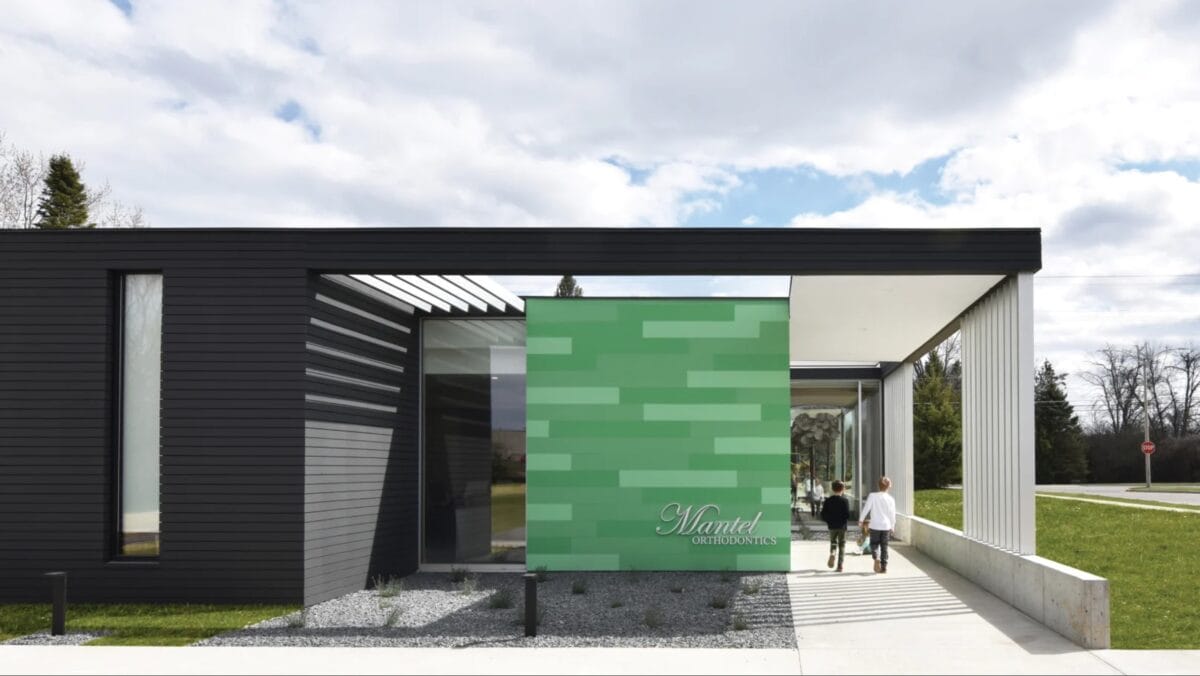
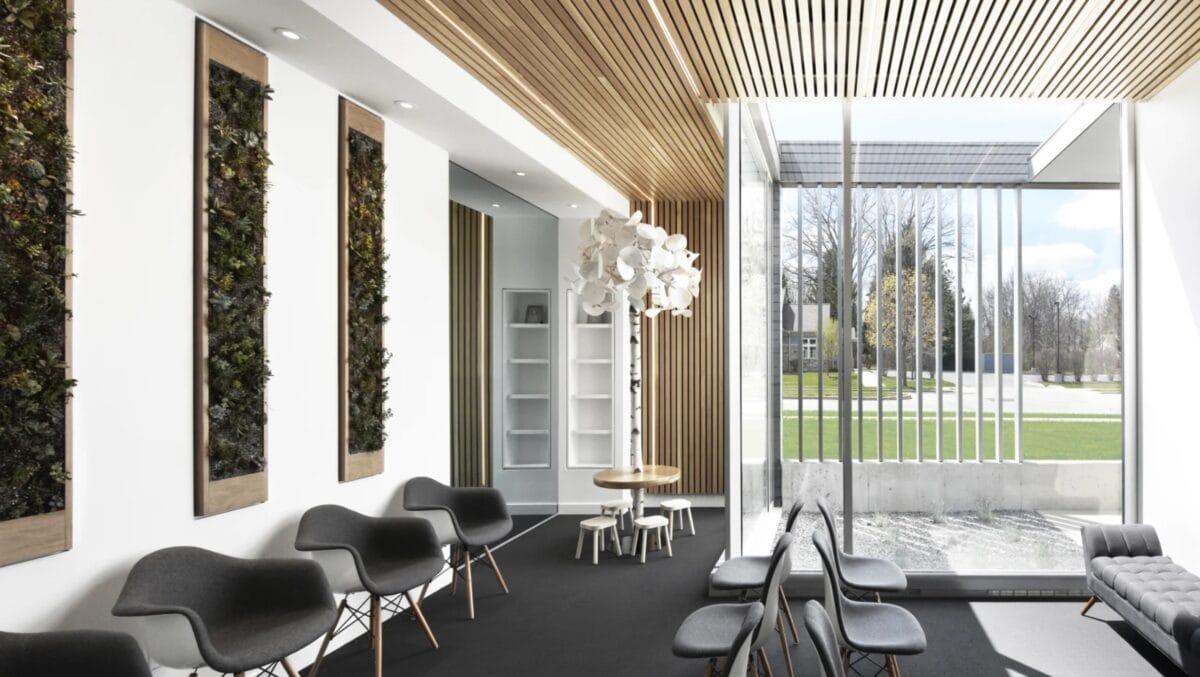
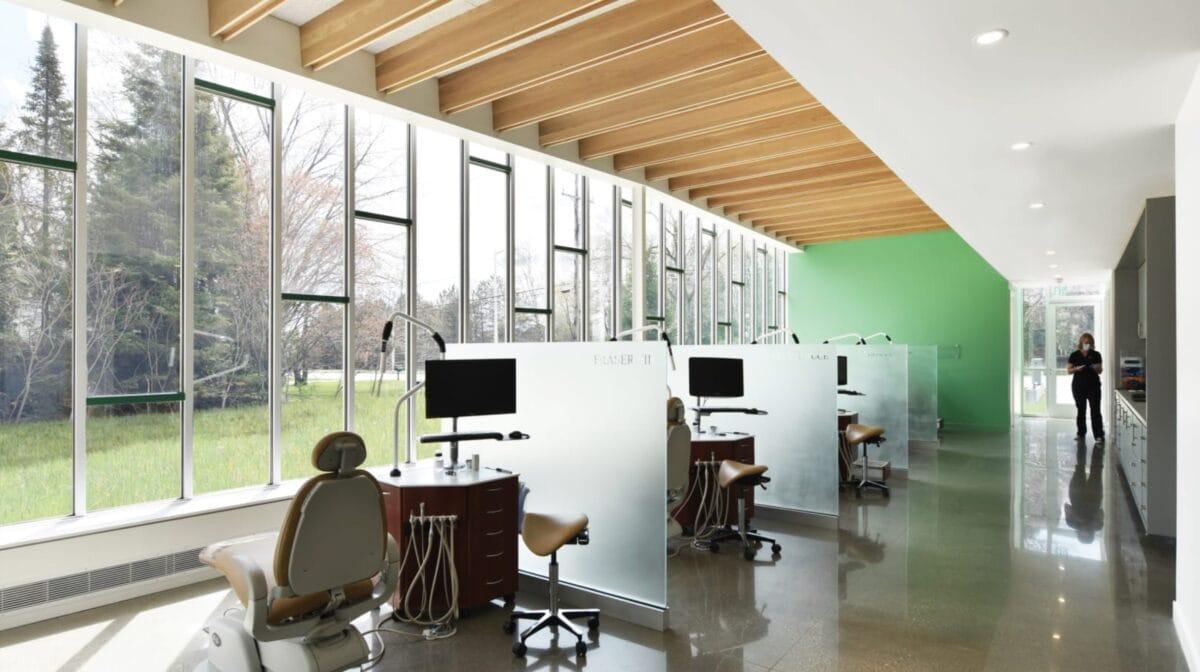
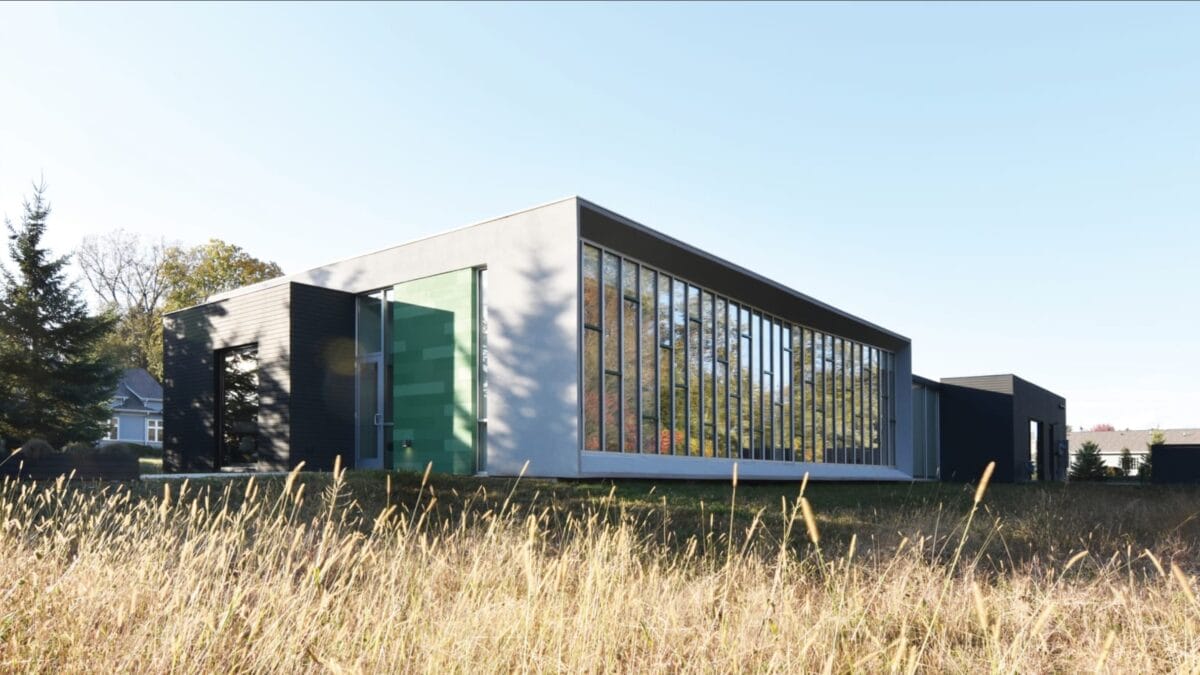
Upon entering, patients are greeted by a wood-slatted ceiling that leads them to the reception desk and surrounds a glass-enclosed waiting room. During treatment, patients are able to enjoy the view of the local meadows along the glazed open work space. To further complete the space, standard vinyl flooring has been replaced with polished concrete floors and milled baseboards. Natural materials and elegant furniture prove that waiting rooms do not have to be boring and uninteresting. In addition, a special clothes rack, which is made of drawers, is suitable for patients of any height.
“The jury was impressed by the level of involvement of owners and stakeholders, which is unusual for a project of this scale. It is well integrated into the environment and the transition space between the car park and the clinic is well done.” – the jury’s comment
Although the project was initially met with skepticism during a comprehensive review required by the municipality, the team demonstrated how the new building preserves the traditions of Midwestern pastoral architecture. It was adopted unanimously without objections from the public.
UCSF Connie Frank Transplant Center
Architectural firm: NBBJ
Owner: University of California, San Francisco (UCSF)
Location: San Francisco, USA
Category: Reconstruction
Area: 1104 sq.m.
Year of construction: 2021
Academic medical institutions in urban areas routinely provide emergency care to patients, but their specialty clinics are too often housed in older buildings. UC San Francisco Medical Center, one of the top 10 hospitals in the country, also has this problem. His pancreas and liver transplant center on the Parnassus campus needed room to expand, but the nearby facility he could expand to was cramped and outdated. For this project, the design team transformed an outdated space into a spacious and welcoming environment for patients and their families.
Hidden behind decades of partial renovations, the building’s minimalist outlines—round concrete columns, arched beams, and wide windows—have been recreated and now accentuate the beauty of the San Francisco landscape. In addition, this update creates a wonderful environment for patients, staff and families.
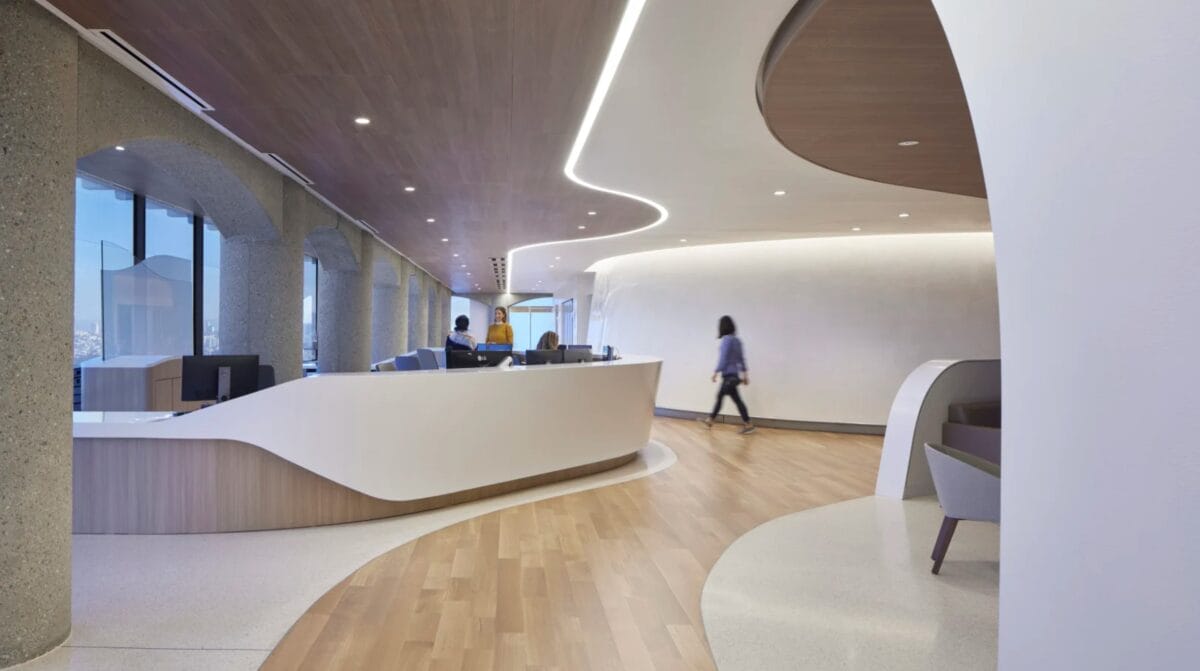
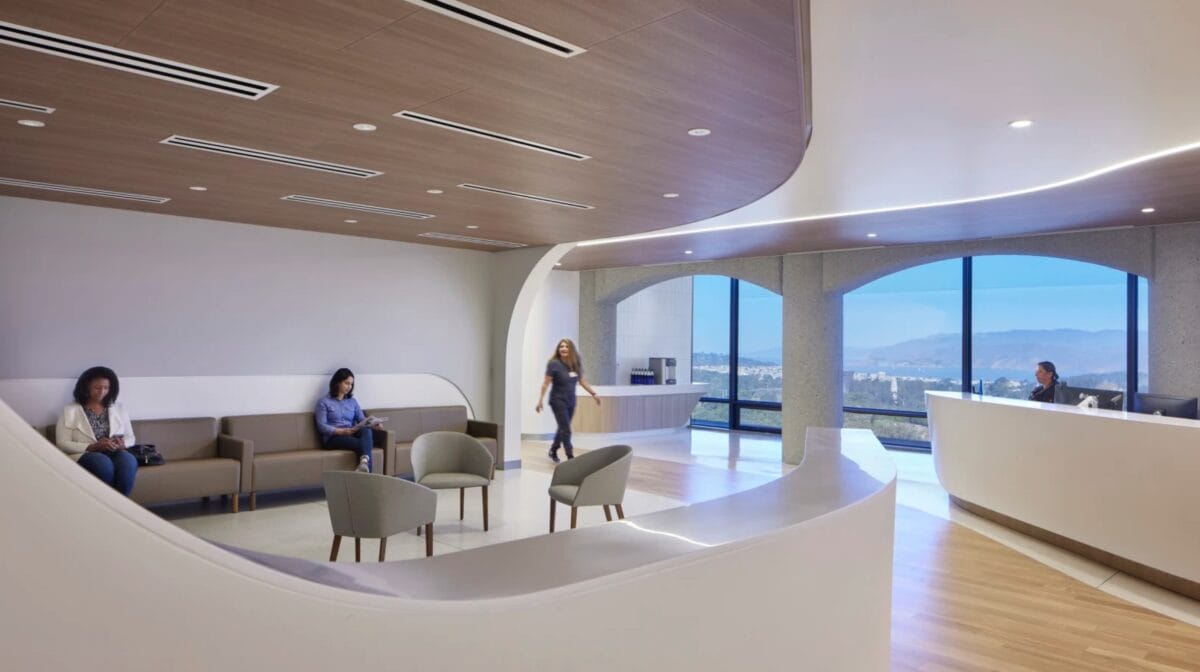
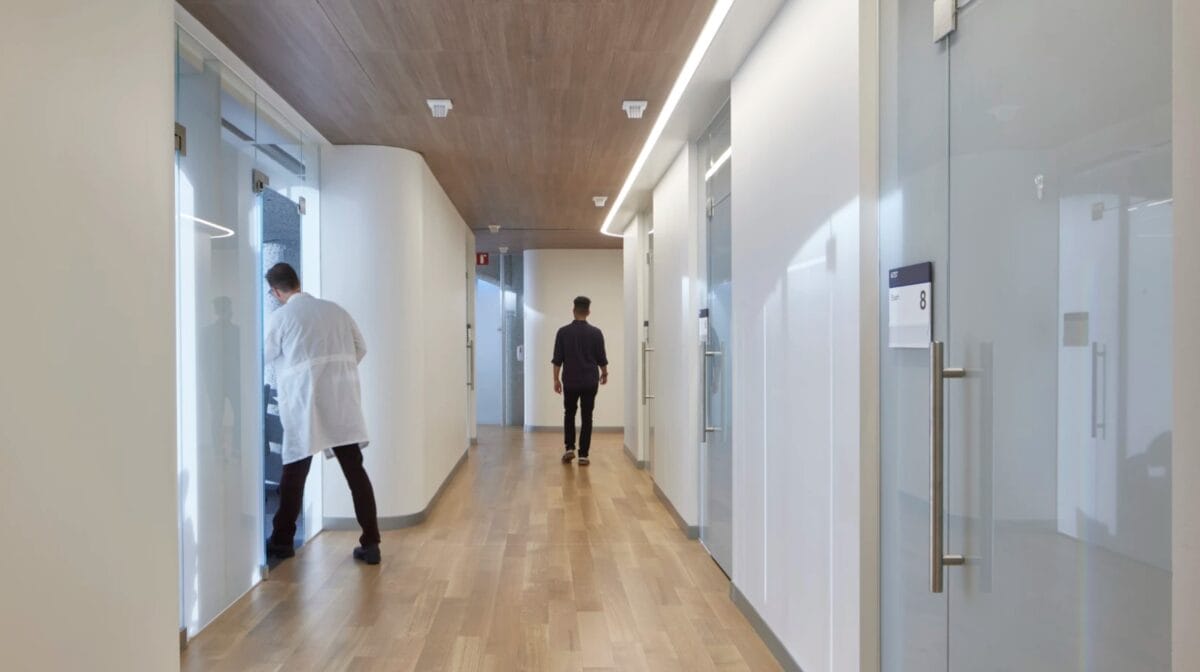
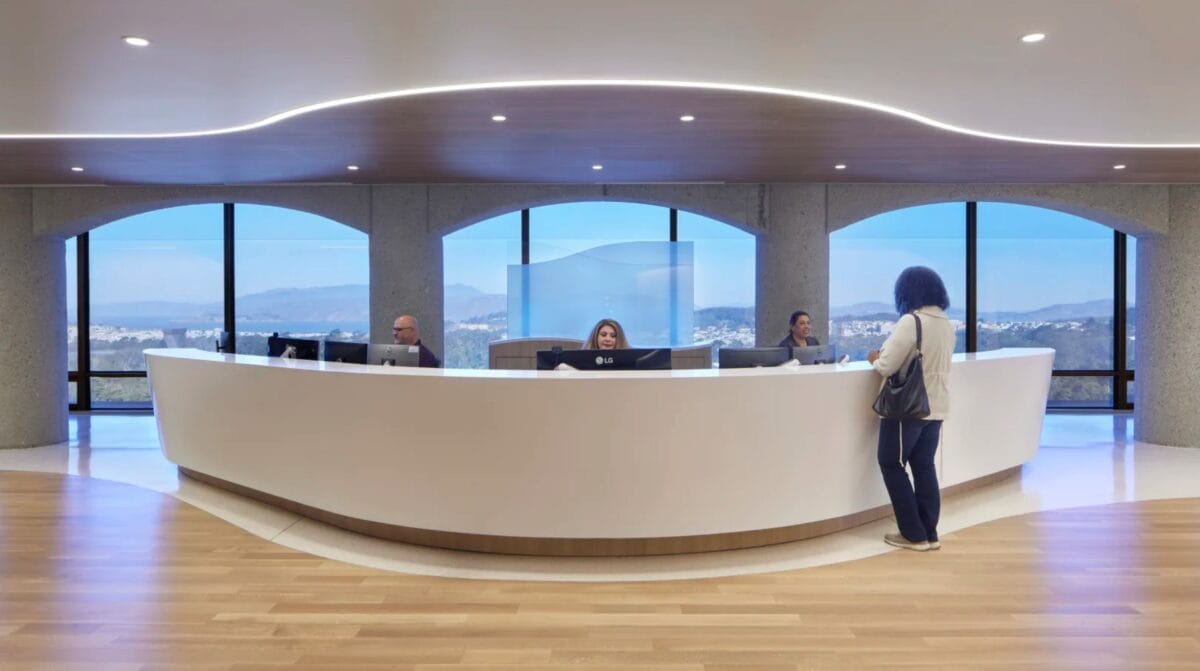
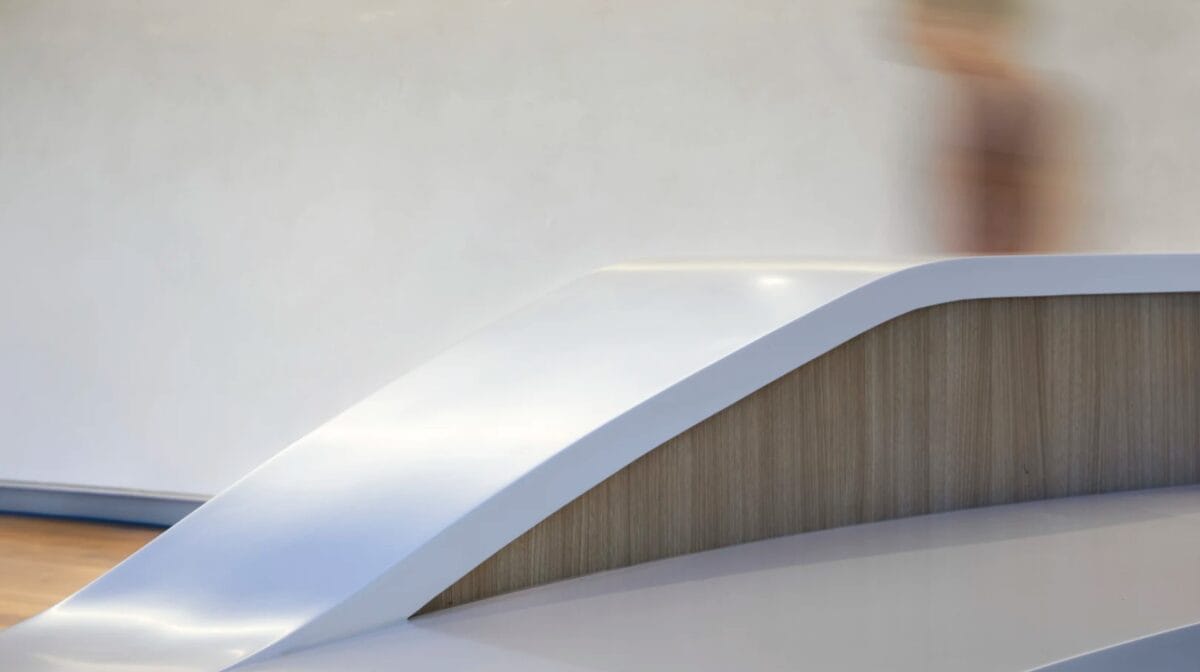
Integrated forms and finishes support a healing environment while also enhancing the existing architectural form. The existing clinic had maple floors and wavy paneled ceilings, and an intricate plaster wall was visible from the updated entrance. The new clinic organically fits into the existing interior design, enveloping the space with smooth geometry and a warm shade of wood.
“The renovation of the old building is impressive and the lobby before and after is commendable. The design team made the space very warm and welcoming. It’s impressive how the team was able to create the curves of the existing building while emphasizing the historic architectural form.” – the jury’s comment.
The project unites three transplant departments of the hospital under one roof. The design team developed the space within the building with dedicated compartments and zones that simplify the design structure. The design incorporates the principles of neuroarchitecture, including curves, sculptural lighting and environmental views.
Because transplant patients often require long hospital stays, special attention is paid to patient comfort. So that each of the spacious treatment rooms is as functional as it is welcoming. The team used immersive virtual reality and full-scale mockups during the facility’s design process. In addition, the integrated design ensures the well-being of the clinic staff. For example, the reception desk has four workstations that can be easily converted from a sitting position to a standing position, and ergonomic doctor’s desks allow doctors to move smoothly from one patient to another.
When redesigning and repurposing aging healthcare infrastructure, two challenges need to be addressed: preserving the integrity of the original design and managing resources responsibly. The expansion of the Connie Frank Transplant Center at the University of California, San Francisco has resulted in 25% savings and improved patient comfort and efficiency.
Uganda Women’s and Children’s Clinic
Architectural firm: LS3P and Go Design Inc.
Owner: Go Design Inc.
Location: Mitiana, Uganda
Category: Unbuilt
Area: 1858 sq.m.
Year of construction: 2023
This medical campus in rural Uganda includes laboratory facilities, a maternity ward, an emergency room, accommodation for doctors and more, providing essential access to health care for women and children in the region. In addition to supporting the basic human right of access to healthcare, the project is also a zero-emission facility that meets the environmental needs of the region.
The clinic, which provides the highest level of medical services free of charge, was the result of a productive partnership between a team of designers and doctors from Uganda and America. The clinic is located near the equator, north of the great Lake Victoria in Uganda.
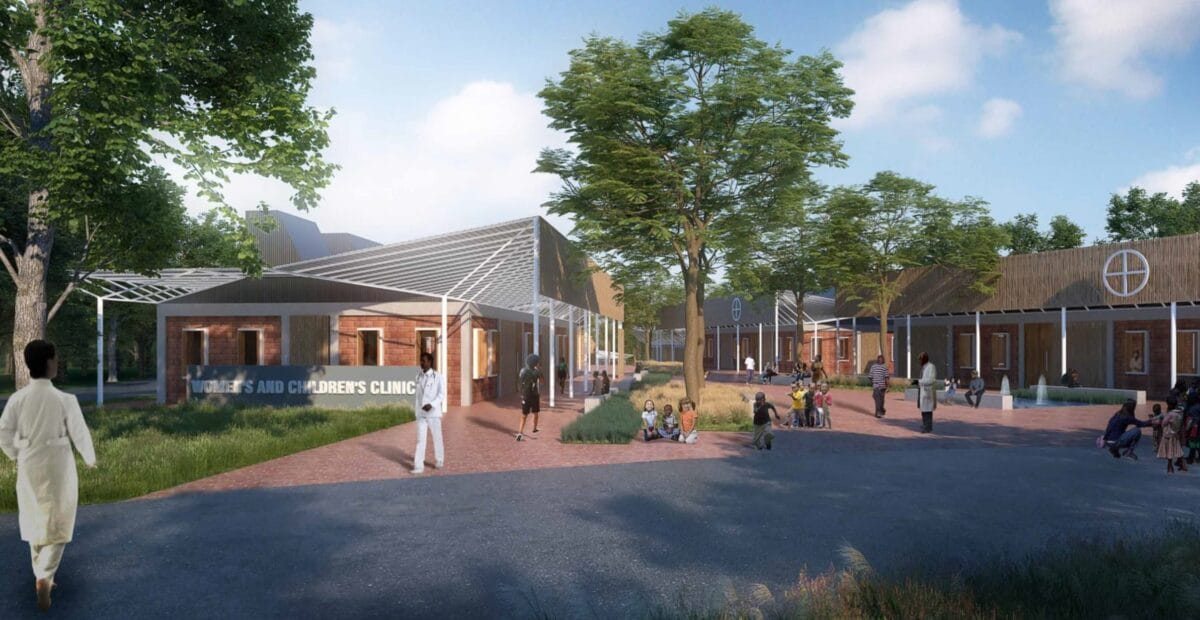
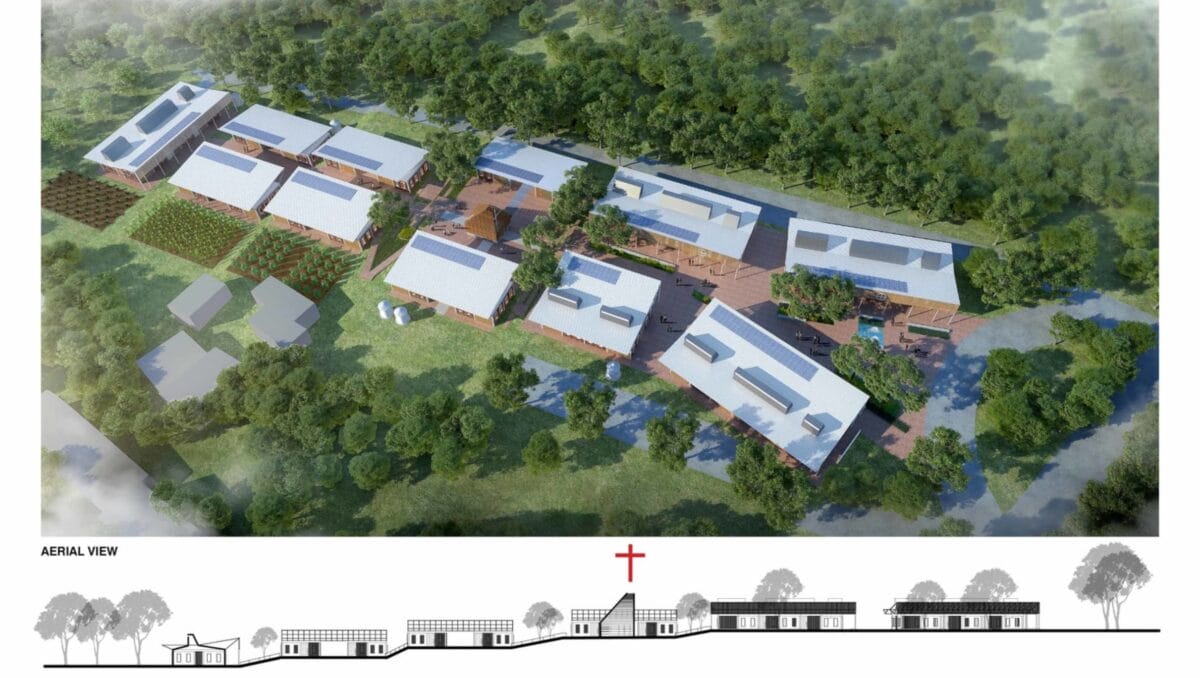
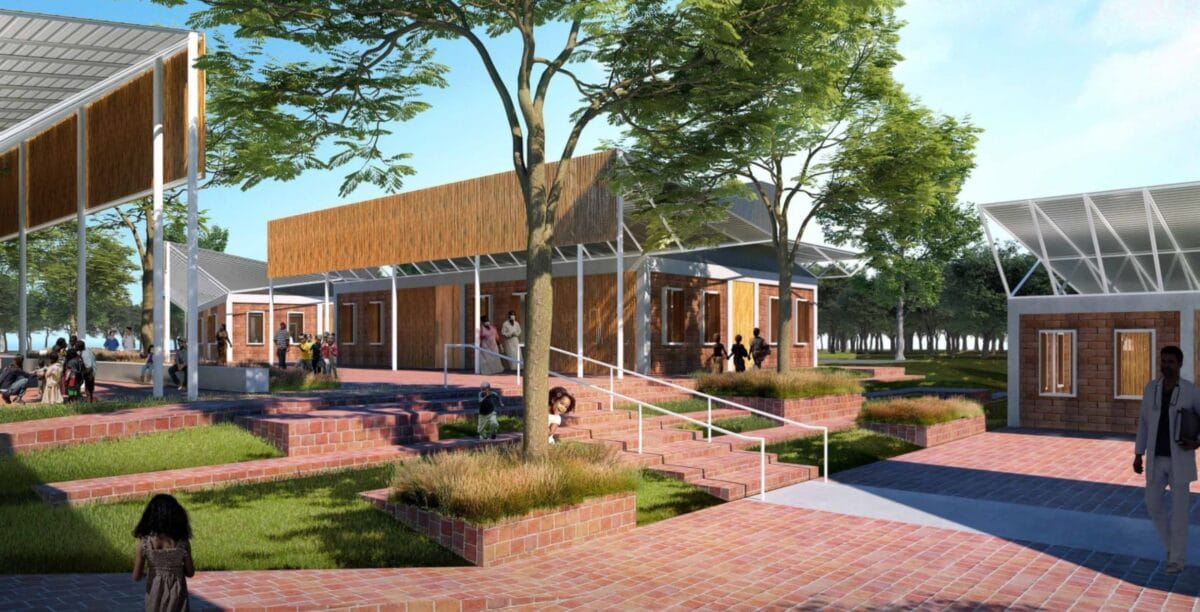
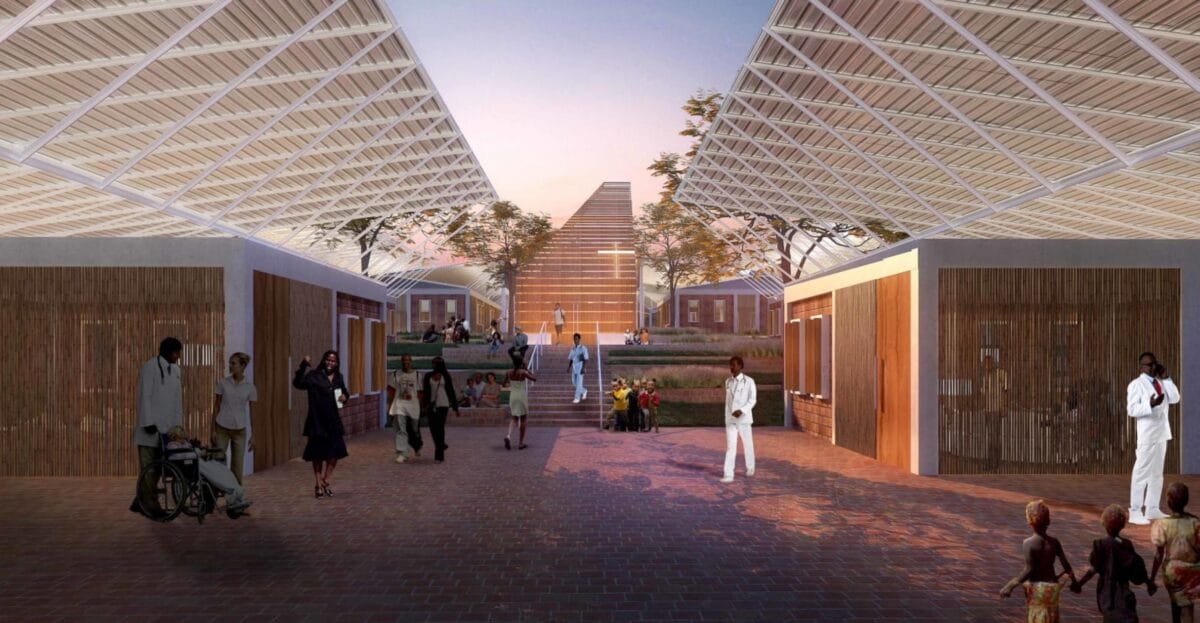
The typical, large and close-knit structure of ordinary Ugandan families was crucial to the design. Spaces between buildings were a priority. They are programmed to encourage informal communication and unexpected experiences as visitors navigate the campus. The central square of the clinic is paved with cobblestones. There are also green spaces, trees and cascading stairs that have separate seating areas.
“The goals of this project are incredible and the judges loved how these goals extend beyond the building to the community and include programs such as vocational training and overall community wellness,” commented the jury.
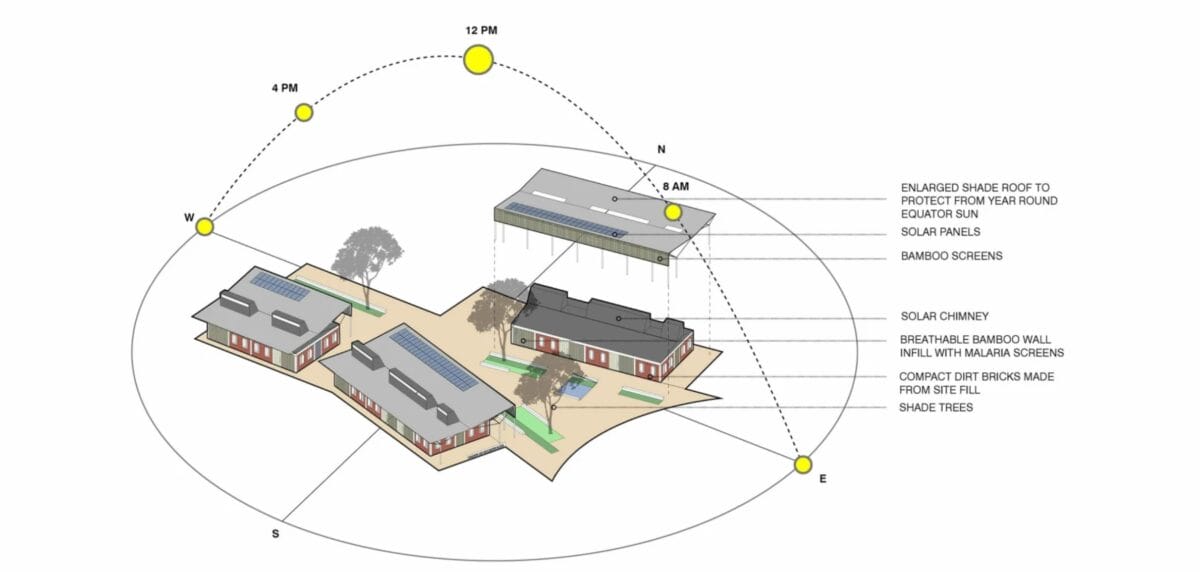
The building materials are mainly renewable, low carbon and native to the region. Most walls include dry-lay bricks made from excavated and compacted earth from the construction site. Doors, screens, etc. are made of eucalyptus. By focusing on local materials, the design team ensured that the construction of the clinic expanded the knowledge of local craftsmen so that they could use these sustainable methods in future projects.
The clinic must operate without air conditioning, so several engineering elements work in concert to create a passive and efficient healthcare campus, including a solar chimney that keeps the clinic cool even in the hottest months. In addition, the design team used a multi-layered screen system made of mosquito netting and bamboo sticks to facilitate diffused light and air flow.
This project is a true demonstration of design’s ability to solve problems for people who need it. By bringing together the expertise of design professionals, physicians, local artisans and community members, we have created a place of healing that is authentic and one of a kind.
“The jury appreciated how many organizations collaborated on this project and the amount of planning required to implement it. Impressively low cost and free services are worthy of praise,” commented Jury.


